

A glue dispensing machine is a precision industrial device designed to apply adhesives, sealants, or other fluid materials onto a substrate in a controlled, accurate, and repeatable manner. It is widely used in modern manufacturing industries such as electronics, automotive, medical devices, packaging, and aerospace, where consistent adhesive application directly affects product quality and reliability.
Compared with manual glue application, a glue dispensing machine significantly improves precision, efficiency, and consistency. It eliminates human error and ensures stable production output across large-scale manufacturing environments.
Definition of a Glue Dispensing Machine
A glue dispensing machine is an automated system that controls the flow, volume, timing, and placement of adhesive materials. It uses air pressure, mechanical force, or servo-driven mechanisms to push adhesive through a dispensing valve or nozzle.
Most systems are integrated with CNC motion platforms or robotic arms to achieve precise movement in X, Y, and Z directions.
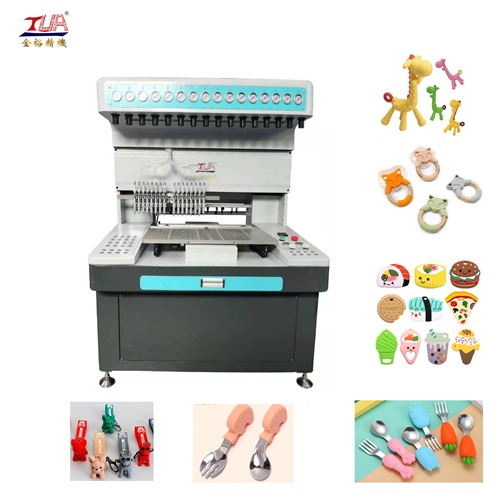
Working Principle of a Glue Dispensing Machine
The operation begins with adhesive being stored in a cartridge, reservoir, or pressure tank. Compressed air or mechanical force is then used to push the adhesive toward the dispensing system.
The dispensing valve opens and closes according to programmed instructions, controlling the flow rate and droplet size. At the same time, a CNC system or robotic arm moves the nozzle along a predefined path, ensuring accurate application on the target surface.
This coordinated process allows the machine to deliver high precision and repeatable results even in large-scale production.
Types of Glue Dispensing Machines
Glue dispensing machines can be categorized based on their level of automation and application requirements.
Manual dispensing machines are operated by hand or foot switch and are commonly used for small-scale or low-volume production.
Semi-automatic machines combine manual loading with automated dispensing control, offering a balance between flexibility and efficiency.
Fully automatic dispensing machines are integrated with robotic systems and are designed for high-speed mass production environments.
Two-component dispensing machines are used when two materials, such as resin and hardener, need to be mixed in precise ratios before dispensing.
Vacuum dispensing systems are commonly used in electronics and medical industries to eliminate air bubbles and improve dispensing quality.
Applications of Glue Dispensing Machines
Glue dispensing machines are widely used across multiple industries. In electronics manufacturing, they are used for PCB assembly, chip bonding, and encapsulation. In the automotive industry, they are applied in sealing sensors and bonding interior components.
In LED lighting production, they are used for housing and lens sealing. Medical device manufacturing relies on them for precision assembly. Packaging industries use them for sealing and labeling, while aerospace applications require them for high-reliability bonding processes.
These applications highlight the importance of dispensing machines in modern manufacturing systems.
Advantages of Glue Dispensing Machines
One of the main advantages is high precision, allowing micron-level control over adhesive placement. The system also improves production efficiency by reducing cycle time compared with manual methods.
Consistency is another key benefit, as every product receives the same adhesive volume. Material waste is significantly reduced due to controlled dispensing, and labor costs are lowered because of automation.
Key Components of a Dispensing System
A complete dispensing system typically includes a controller that manages operation logic, a pressure system that delivers adhesive, and a dispensing valve or nozzle that controls output.
It also includes a motion platform such as a CNC system or robotic arm, along with software that defines dispensing paths and parameters. Each component plays a critical role in ensuring system accuracy and stability.
How to Choose a Glue Dispensing Machine
Selection depends on several factors including the type and viscosity of adhesive, required precision level, production volume, and degree of automation.
Maintenance requirements and operating costs also play an important role, as well as the specific application industry. A properly selected machine ensures stable performance and long-term efficiency.
Future Development Trends
Glue dispensing technology is evolving toward greater intelligence and automation. AI-based motion control systems are being developed to optimize dispensing paths.
Vision systems are increasingly integrated to improve positioning accuracy. IoT monitoring allows real-time system diagnostics, while micro-dispensing technology supports ultra-precise applications. Fully automated production lines are becoming more common in advanced manufacturing environments.
Conclusion
A glue dispensing machine is an essential part of modern industrial automation. It provides precise, efficient, and consistent adhesive application across a wide range of industries. As manufacturing continues to develop toward higher automation and intelligence, dispensing machines will play an increasingly important role in production systems.


