
Small hydraulic presses (commonly known as oil presses or small vulcanizing machines) are mainly used in workshops, small rubber and plastic factories, and mold testing environments for light-duty pressing, rubber compound pressing, mold opening and closing lifting, and silicone/rubber molding and shaping operations. They employ a compact hydraulic system that generates controllable pressure through hydraulic oil, allowing users to complete precise molding operations for rubber and plastic products with less manpower. Compared to large industrial vulcanizing equipment, small hydraulic presses are more flexible, easier to operate, and suitable for small processing workshops with limited workspace. They are widely used in rubber and plastic sample prototyping workshops, small silicone product production lines, material pressure resistance testing stations, and other applications where large vulcanizing hydraulic equipment is not required.
Small hydrualic machine generally refer to models under 100 Tonages. Jinyu Machinery supplies hydrualic presses of different specifications including 30T, 50T, 63T, 100Ton. The range covers flat vulcanizing, front eject vulcanizing, vacuum vulcanizing, 2RT models, 2RT models and more.

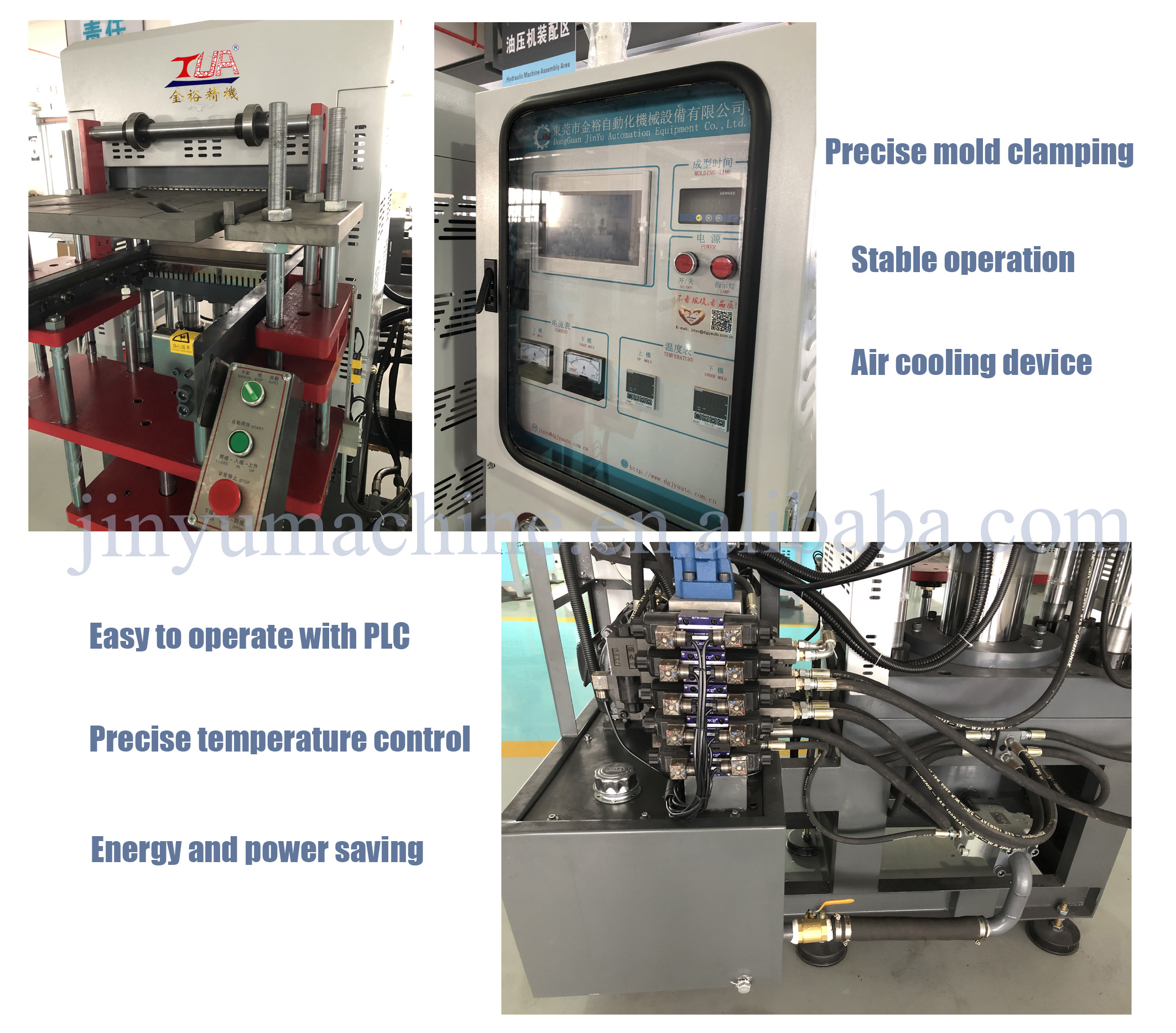
The working principle of small hydraulic vulcanizing machines is the same as that of large rubber and plastic hydraulic systems, both based on the Pascal's fluid pressure transmission principle. Inside the system, a hydraulic pump forces hydraulic oil into the cylinder, generating mechanical driving forces for mold closing, pressing, and pressure holding. Despite its compact structure, the entire hydraulic system still includes core components such as a hydraulic pump, pressure regulating control valve, main cylinder, and precision pressure gauge. This enables it to efficiently and stably perform repetitive silicone molding, rubber vulcanization, and small-sample pressing operations.
One of the most common uses of small hydraulic presses is for rubber and plastic mold maintenance, parts pressing, and sample repair. For example, it can be used to press rubber and plastic mold parts into or out of mold components, correct deformed small mold plates, and press rubber sealing cores—tooling operations requiring precise pressure control. In small and medium-sized rubber and plastic processing plants, small hydraulic presses are particularly suitable for simple mold debugging, rubber product trimming and pressing, and tooling assembly.
In addition, small hydraulic vulcanizing presses are also commonly used in the manufacturing process of lightweight rubber and plastic products. Compact hydraulic presses can complete production tasks such as molding small silicone parts, shaping thin rubber sheets, pressing irregularly shaped soft rubber products, and pressing plastic composite parts. Because the equipment output pressure is stable, it can accurately complete low-temperature vulcanization and atmospheric pressure shaping processes for silicone rubber, significantly improving the dimensional and appearance consistency of rubber and plastic products, while reducing the workload of operators manually closing molds and pressing materials.
Another important application area for small rubber and plastic hydraulic equipment is in material performance testing environments. Rubber and plastics R&D engineers frequently use compact hydraulic systems to test the compressive strength, compression set, and pressure resistance of compounded silicone rubber, natural rubber, and foamed rubber and plastic materials. Because the equipment pressure and holding time can be precisely adjusted, it is ideal for applications requiring processing precision and small-batch sample testing, such as laboratories and quality control departments.
Small rubber and plastics hydraulic presses are also popular in DIY rubber and plastics workshops and vocational skills education institutions. In technical schools and rubber and plastics equipment training centers, students learn rubber and plastics vulcanization processes and fluid hydraulic control principles through hands-on practice with small hydraulic presses, mastering the basic operating procedures of silicone product molding equipment. This type of practical training helps operators master the core fundamentals of hydraulic equipment pressure adjustment, pressure holding, and mold closing before operating large industrial vulcanizing presses.
Despite their small size, these small hydraulic presses specifically designed for rubber and plastics can still output stable and reliable compression and vulcanization performance when properly maintained. Regularly checking the hydraulic oil level, cylinder seals, and pressure regulating valves is crucial for ensuring accurate pressure output from the equipment. Maintaining the cleanliness of the hydraulic oil is especially important; contamination with impurities directly causes unstable pressure, uneven vulcanization of rubber and plastic products, and foaming due to insufficient material, while also accelerating the wear and aging of precision internal hydraulic components.
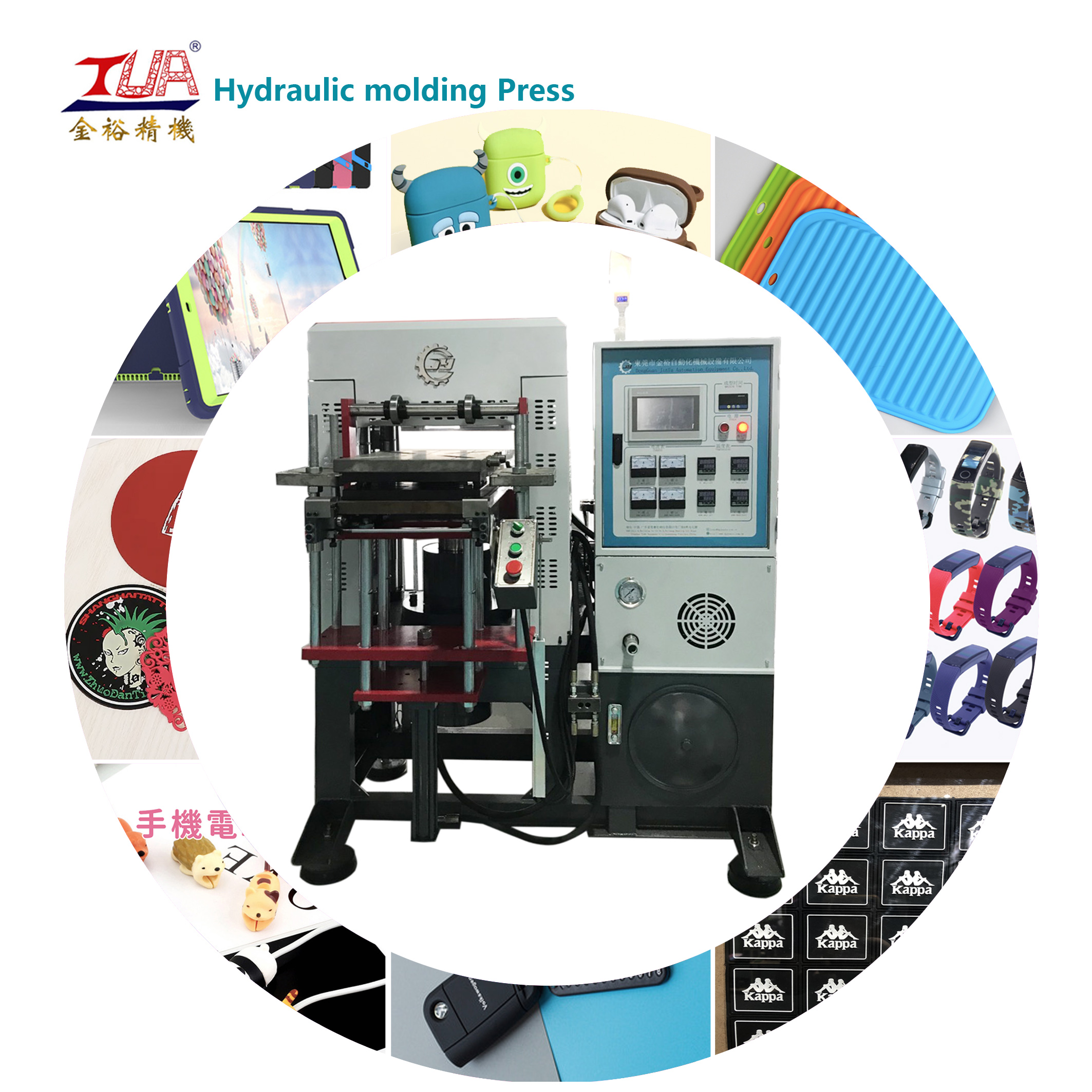
Compared to large industrial rubber and plastic vulcanizing presses, small hydraulic presses offer numerous advantages in adaptability to various scenarios: lower equipment purchase costs, smaller footprint, lower overall energy consumption, simpler installation and commissioning, and lower learning curve. These core advantages make them the preferred equipment for small silicone processing plants, workshop-style rubber and plastic workshops, and mold prototyping studios. These scenarios do not require large-tonnage heavy-duty vulcanization capacity; stable and reliable controllable hydraulic pressing power is sufficient for small-batch production.
Single-head small rubber and plastic hydraulic press (oil press)
However, small rubber and plastic hydraulic equipment also has clear limitations. It is not suitable for large-tonnage heavy-duty rubber and plastic processing procedures, such as the integral vulcanization of large-size thick rubber sheets, high-pressure molding of large rubber seals, and heavy composite material compression molding. For these high-load production scenarios, large-tonnage industrial-grade rubber vulcanizing hydraulic presses must be selected. Accurately identifying the applicable operating conditions of the equipment is key to ensuring the safety of rubber and plastic production operations and improving production efficiency.
In summary, the small hydraulic press (small vulcanizing machine) is a compact and stable tooling device specifically designed for rubber and plastics, widely applicable to four major scenarios: rubber and plastic mold maintenance, mass production of lightweight silicone rubber, material quality inspection and testing, and industry skills training. Relying on a mature hydraulic transmission system, the equipment outputs controllable and adjustable pressing and holding pressures, flexibly adapting to most small-batch rubber and plastic molding processes. Whether in small processing workshops, rubber and plastic R&D laboratories, or vocational skills training settings, it is an indispensable core hydraulic equipment in the lightweight production process of the rubber and plastics industry.
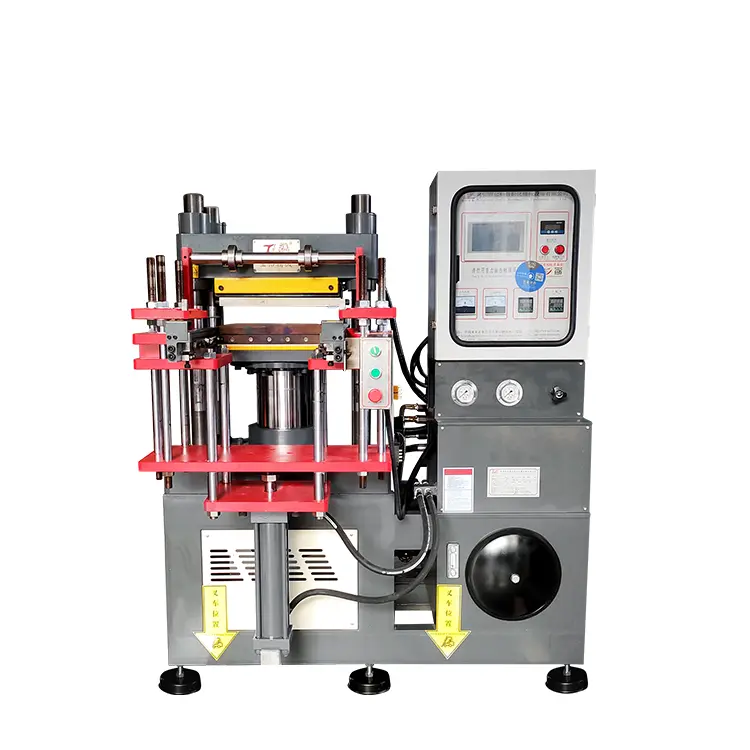
However, small hydraulic machines also have limitations. They are not suitable for extremely heavy-duty tasks such as large-scale forging or thick steel forming. For such applications, an Industrial Hydraulic Machine with higher tonnage is required. Understanding the correct usage scenario is important to ensure safety and efficiency.
In conclusion, a small hydraulic machine is a compact yet powerful tool used for repair, light manufacturing, testing, and training purposes. By using a reliable Hydraulic Machine System, it delivers controlled force in a flexible and efficient way. Whether in workshops, small factories, or educational environments, it plays an important role as a practical form of Hydraulic Equipment that supports everyday industrial and technical tasks.


