
Dongguan Jinyu Automation Equipment Co., Ltd.

Dongguan Jinyu Automation Equipment Co., Ltd.

Can an Embossing Machine Emboss Plastic?

2026 09/02

Fabric Embossing Machine Introduction

Fabric embossing machine is a textile‑specialized thermal‑pressure equipment. It creates raised / indented textures, logos and 3D relief patterns by deforming fabric fibers with heat and pressure.

Important distinction:

  1. Fabric fiber embossing: No silicone added. Texture comes from deformed fabric fibers. Patterns may rebound after washing for natural fiber fabrics.
  2. Silicone embossing on fabric: Cures silicone material onto fabric surface. Raised parts are silicone layer, excellent wash resistance. A flat‑bed hydraulic press can run both processes by changing molds, cushions and parameters, but not at the same time.

Working Principle Heat softens fabric fibers. Engraved metal mold or roller applies controlled pressure to reshape fiber structure. Patterns are fixed after cooling. Cotton / linen fabrics normally need resin finishing to keep texture from bouncing back.

Main Machine Types

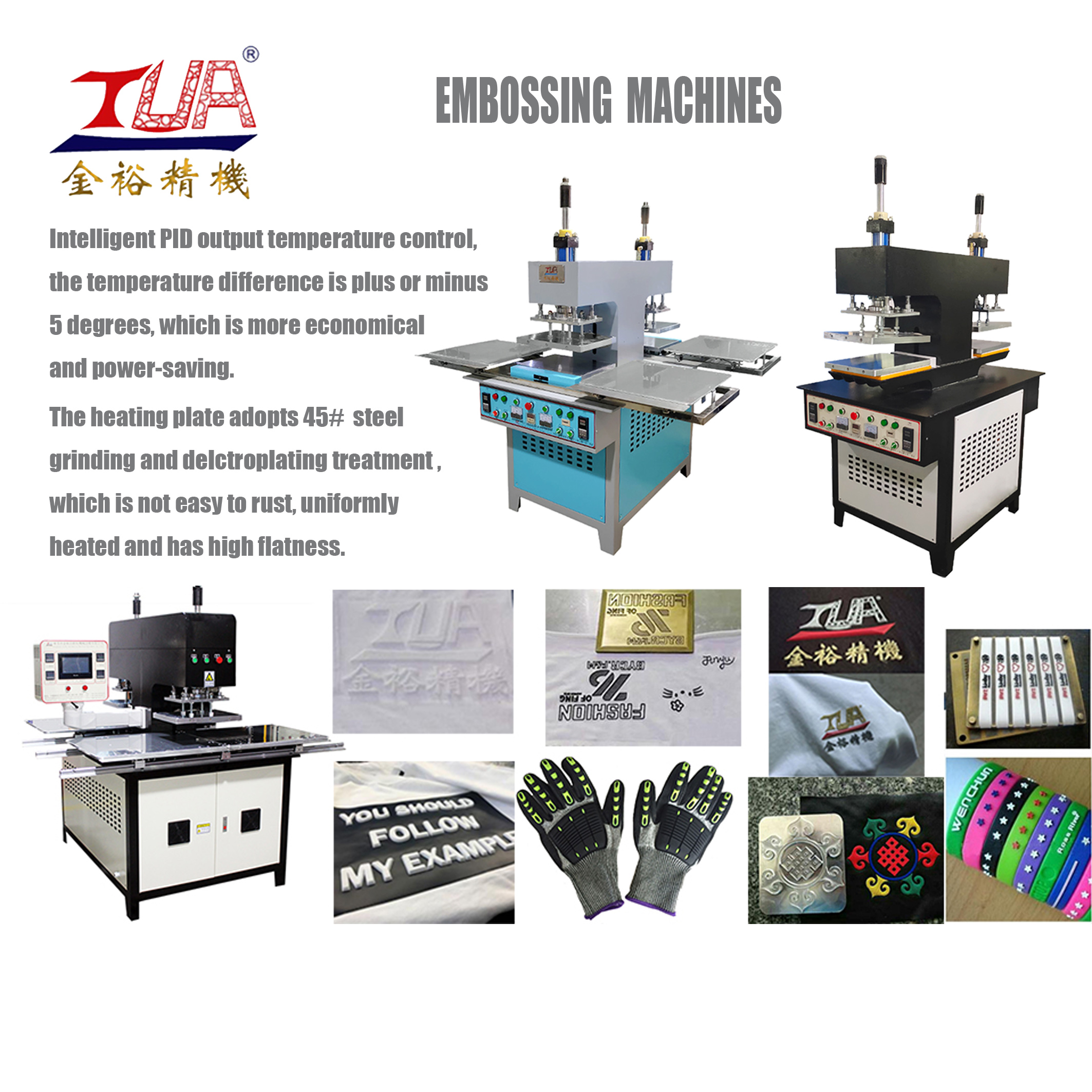
  1. Flat‑bed hydraulic fabric embossing machine Batch‑by‑batch processing for cut‑pieces, garments, denim, shoe fabrics. Adjustable hydraulic pressure, dual‑zone heating. Equipped with high‑temperature silicone cushion platen.Can switch between fiber embossing and silicone embossing by tooling & parameter adjustment.
  2. Rotary calendar / roller embossing machine Roll‑to‑roll continuous production for wide‑width fabric rolls: home textile, curtain, sofa fabric, synthetic leather. High‑speed mass production.Not fit for silicone embossing, silicone sticks to heated rollers easily.
  3. Ultrasonic embossing machine Forms texture by high‑frequency vibration, mostly for non‑woven textiles, rarely for garment fabric.

Suitable Materials Great for: Polyester, nylon, PU synthetic leather, oxford fabric, non‑woven. Conditional: Cotton, linen, rayon (requires resin finishing). Not fit: Pure wool and other heat‑sensitive textiles.

Applications Garment & denim, home textile, shoe & bag fabrics, automotive upholstery, artificial leather, non‑woven products.

Key Process Parameters Temperature, pressure, hold‑time, mold carving depth, fabric finishing treatment.
 

Many customers easily confuse fabric embossing, fabric silicone embossing, and plastic embossing processes. In fact, they differ significantly in forming principles, production parameters, machine compatibility, and finished product performance.
First is the fabric fiber embossing process. This process requires no auxiliary materials such as silicone or glue. It adopts high temperature and high pressure to deform and shape the fabric fibers themselves, creating concave-convex textures and hidden logos on the fabric surface. The processing temperature is controlled at 130-170°C for pure physical shaping of fabrics. Flat hydraulic machines are fully compatible with this process, and roller machines can support continuous embossing for full-roll fabrics, though they cannot be used for silicone embossing. In terms of durability, textures on chemical fibers like polyester are long-lasting and stable, while patterns on natural fibers such as cotton and linen tend to rebound and fade after washing.
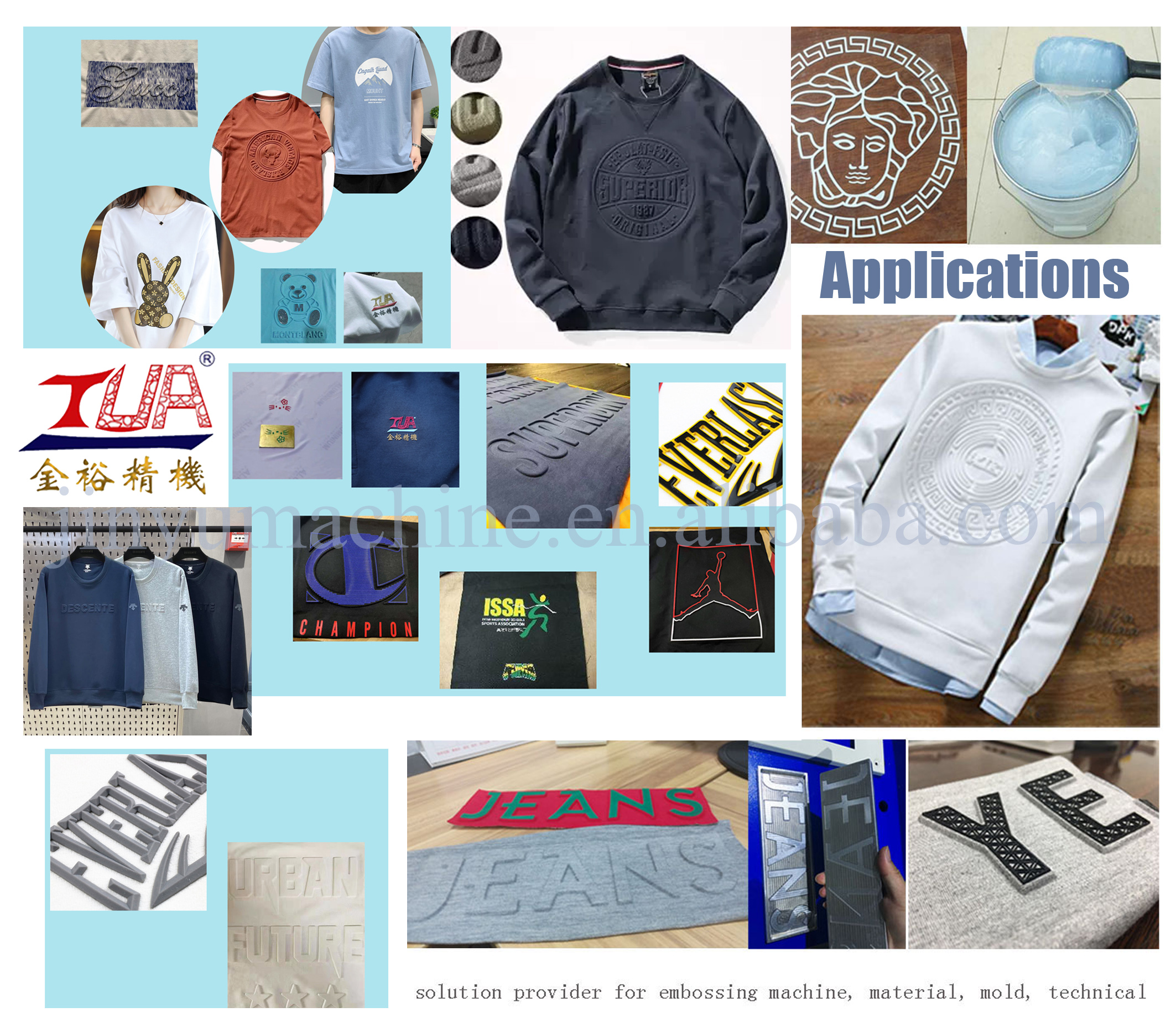
Second is the fabric silicone embossing process. Instead of deforming the fabric itself, this process forms 3D raised patterns on the fabric surface by curing silicone materials through high-temperature vulcanization. The processing temperature needs to be stably maintained at 140-180°C to meet silicone curing requirements, delivering finished patterns with strong adhesion, excellent wash resistance and no peeling. This process is only applicable to flat hot pressing machines. It can be freely switched with fabric fiber embossing by replacing molds and cushion plates and adjusting production parameters. Roller machines are not suitable for this process, as they easily cause silicone sticking to rollers and distorted patterns.
Third is the plastic embossing process. It targets plastic substrates such as plastic sheets and films. Low temperature and low pressure are applied to soften the plastic material and form permanent fixed textures through self-deformation, with a processing temperature of 80-160°C. Although it also follows the heat and pressure forming principle, its machine worktable, pressure-bearing structure and matching parameters are specially designed for hard plastics. It is incompatible with textile processing equipment, cannot process fabrics, and does not support silicone curing processes. The embossed textures on plastic products are permanent and free from rebound issues.
To summarize machine compatibility: Flat hot pressing machines support dual functions, realizing both fabric fiber embossing and silicone embossing by switching parameters and molds. Roller machines are only suitable for pure fabric embossing and plastic embossing, and cannot perform silicone embossing. Professional plastic embossing machines have fixed structural parameters and are completely unavailable for all types of fabric processing.