
But where are embossing machines commonly used? From packaging and automotive components to leather products and consumer goods, embossing technology plays an important role in many industries.

What Industries Use Embossing Machines?
Embossing machines are commonly used in industries that require surface patterns, branding effects, or functional textures. The main application industries include packaging, automotive, leather, textiles, plastics, electronics, and printing.
1. Packaging Industry
The packaging industry is one of the most common applications for embossing machines. Embossing helps create premium textures, improve visual appeal, and enhance brand recognition.
Common embossed packaging products include:
- Paper boxes
- Gift packaging
- Folding cartons
- Labels
- Paper bags
- Luxury product packaging
For example, cosmetic and luxury brands often use embossed logos or patterns on packaging to create a high-end appearance. Embossing can also improve the tactile experience, making products stand out on store shelves.
Related keyword: embossing machine for packaging
2. Automotive Industry
Embossing machines are widely used in automotive manufacturing to produce textured surfaces and decorative patterns for vehicle interiors.
Common automotive applications include:
- Car interior panels
- Dashboard materials
- Door trims
- Seat covers
- Synthetic leather surfaces
- Floor mats
Embossed textures can improve the appearance of automotive components while also providing better grip, durability, and wear resistance.
Related keyword: automotive embossing machine
3. Leather and Synthetic Leather Industry
The leather industry uses embossing machines to create different surface patterns and textures on natural leather and synthetic leather materials.
Typical applications include:
- Leather bags
- Wallets
- Shoes
- Furniture upholstery
- Automotive leather seats
- Fashion accessories
Embossing allows manufacturers to imitate natural leather patterns, add customized designs, or create unique textures for different markets.
Related keyword: leather embossing machine
4. Plastic Products Industry
Plastic embossing is another important application area. Embossing machines can create textures and patterns on plastic sheets, films, and molded components.
Common embossed plastic products include:
- Plastic films
- PVC sheets
- Decorative panels
- Plastic flooring
- Electronic housings
- Consumer products
Embossed plastic surfaces can provide improved appearance, better grip, and additional functional properties.
Related keyword: plastic embossing machine
5. Textile and Fabric Industry
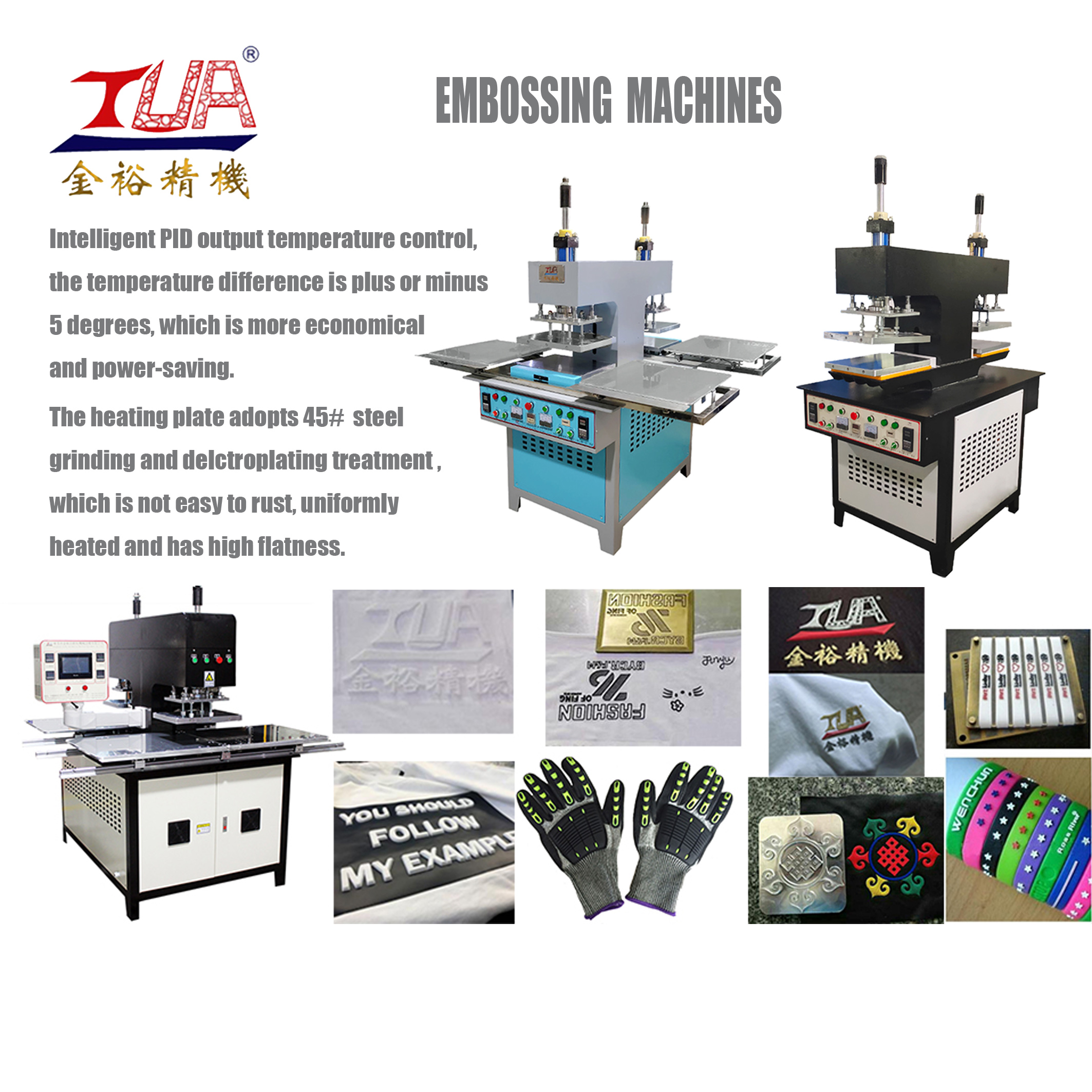
In the textile industry, embossing machines are used to create three-dimensional patterns and special surface effects on fabrics.
Applications include:
- Synthetic fabrics
- Non-woven materials
- Decorative textiles
- Upholstery fabrics
- Clothing materials
Fabric embossing can add unique designs, improve texture, and create premium finishes for fashion and home textile products.
Related keyword: fabric embossing machine
6. Printing and Paper Industry
Embossing machines are commonly used in printing applications to enhance printed materials with a three-dimensional effect.
Typical products include:
- Business cards
- Invitations
- Book covers
- Certificates
- Greeting cards
- Promotional materials
Embossing adds a premium feel and helps important printed products look more professional.
Related keyword: paper embossing machine
7. Electronics and Consumer Products
Many electronic and consumer products use embossed surfaces for both decorative and functional purposes.
Applications include:
- Device panels
- Control buttons
- Protective covers
- Product labels
- Decorative components
Embossing can improve product identification, create anti-slip surfaces, and enhance the overall user experience.
Why Do Manufacturers Use Embossing Machines?
Manufacturers choose embossing machines because they provide several benefits:
Enhanced Product Appearance
Embossing creates attractive textures and patterns that make products more visually appealing.
Improved Brand Recognition
Companies can emboss logos, brand names, and customized designs directly onto products.
Better Surface Performance
Embossed textures can improve grip, reduce slipping, and add functional surface properties.
Increased Product Value
Products with unique textures and premium finishes often have higher perceived value.
What Materials Can Embossing Machines Process?
Depending on the machine type and configuration, embossing machines can process various materials, including:
- Paper and cardboard
- Leather
- Synthetic leather
- Plastic films
- PVC materials
- Fabrics
- Non-woven materials
- Metal foils
The suitable embossing method depends on material characteristics, thickness, and required pattern depth.
How to Choose an Embossing Machine for Different Applications?
Different industries require different embossing solutions. When choosing an embossing machine, manufacturers should consider:
- Material type and thickness
- Required embossing pattern
- Production volume
- Embossing depth
- Working width
- Temperature control requirements
- Automation level
For high-volume industrial production, an industrial embossing machine with precise pressure and temperature control is usually the preferred choice. For customized products, flexible embossing equipment may provide better results.


